

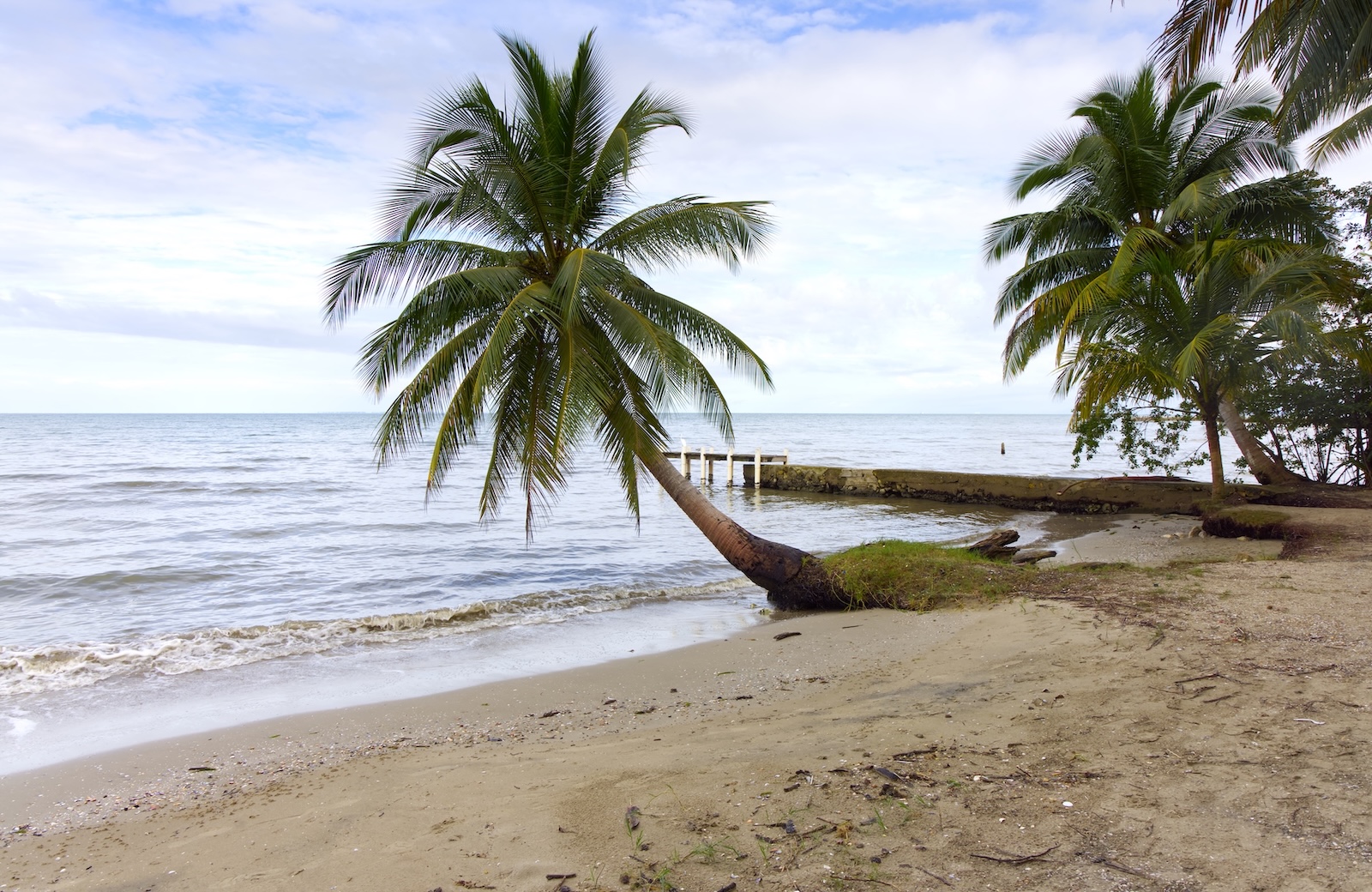
Overview: Livingston sits at the mouth of the Río Dulce on Guatemala’s Caribbean coast and has no road in, so every visitor arrives by boat from Puerto Barrios (30 to 40 minutes, around Q50) or Río Dulce (90 minutes to two hours, around Q125 to Q150). The five things worth your time are Siete Altares, Playa Blanca, a plate of tapado, the town itself, and the Garifuna culture that makes Livingston unlike anywhere else in Guatemala. Half a day covers the town and a cultural experience; a full day adds the waterfalls or the beach, but not both comfortably.
Why Livingston is different from everywhere else in Guatemala
Guatemala is highlands, volcanoes, and Maya ruins. Then there is Livingston, where the music is punta, lunch is fish cooked in coconut milk, and the first thing you hear at the dock might be a language nobody taught you to expect.
The town is the centre of Garifuna life in Guatemala. The Garifuna are an Afro-Indigenous people descended from West Africans and the Kalinago and Arawak of the Caribbean, deported by the British from Saint Vincent in 1797 and scattered along the Central American coast. Livingston is the only Garifuna town in the country.
It is also under more pressure than a first visit suggests. UNESCO inscribed Garifuna language, dance and music on its Representative List of the Intangible Cultural Heritage of Humanity in 2008, having first proclaimed it a Masterpiece in 2001, and the listing is blunt about the risk: economic migration, discrimination and the total absence of Garifuna from the school system threaten its survival, and although the language is still widely spoken, UNESCO records that it is taught in only one village.
That is worth knowing before you go, because it changes what a visit means. This is a living culture holding its ground, not a performance staged for arrivals.
GarifunaLabuga
say it: la-BOO-gaThe Garifuna name for Livingston
Labuga is how Garifuna speakers pronounce the Spanish la boca, the mouth, which is what early Spanish settlers called this spot where the Río Dulce meets the sea. Garínagu worldwide still call the town Labuga whether they are speaking Garifuna, Spanish or English. Livingston is the name a Guatemalan decree gave it in 1831, after an American jurist. Labuga is the name the people who founded it used.
- Garínagu
- The people, plural. Garifuna is the language and the adjective. So: a Garifuna song, sung by Garínagu.
- Yurumein
- Saint Vincent, the homeland the British deported the Garifuna from in 1797. Also the name of the 26 November ceremony in Livingston that re-enacts the landing.
Spellings vary across Guatemala, Belize and Honduras, and you will see both Labuga and Lábuga in print. Garifuna Research Center
What are the best things to do in Livingston?
| What | Time needed | Cost (July 2026) | Best for | Watch out for |
|---|---|---|---|---|
| Siete Altares | 3 to 4 hrs | Q20 entry, plus Q5 tuk-tuk or Q50 boat | Swimming, jungle walk | Weak flow in dry season; go with a guide or group |
| Playa Blanca | Full day | Q20 entry, around Q125 boat round trip | Beach day, families | Murky water in rainy season; crowded on weekends |
| Garifuna cultural experience | 1 to 3 hrs | Q185 to Q750 | Anyone, especially short stops | Book ahead in high season |
| Tapado at a comedor | 1 hr | Q80 to Q120 | Everyone | Often sold out by mid-afternoon |
| Walking the town | 1 to 2 hrs | Free | Getting your bearings | Steep hill from the dock |
| Río Dulce gorge boat | 2 to 3 hrs | Q125 to Q150 one way | Scenery, arriving in style | Doubles as your transport, so plan the direction |
Prices checked July 2026 and quoted in quetzales because most operators take cash only. At Q7.63 to the US dollar on 31 July 2026, Q125 is roughly $16 or BZ$33. Confirm at the dock before you board.
What is Siete Altares and is it worth visiting?
Verdict: Worth it if there has been recent rain and you have three hours. Skip it in a dry March.
Siete Altares is a chain of limestone pools and low waterfalls stepping down through the jungle northwest of town, about four miles along the coast from Livingston. Entry is Q20. There is a basic changing structure and toilet at the bottom, and then you climb.
You have two ways in. Take a tuk-tuk to the Quehueche bridge for around Q5, cross, and walk the beach for roughly 30 minutes until you see the trail sign. Or take a boat from the main dock for about Q50 each way, 15 to 20 minutes. The walk is the better experience and shows you how people along this coast live and work. The boat is the better choice if it is 34 degrees and you have a flight to catch.
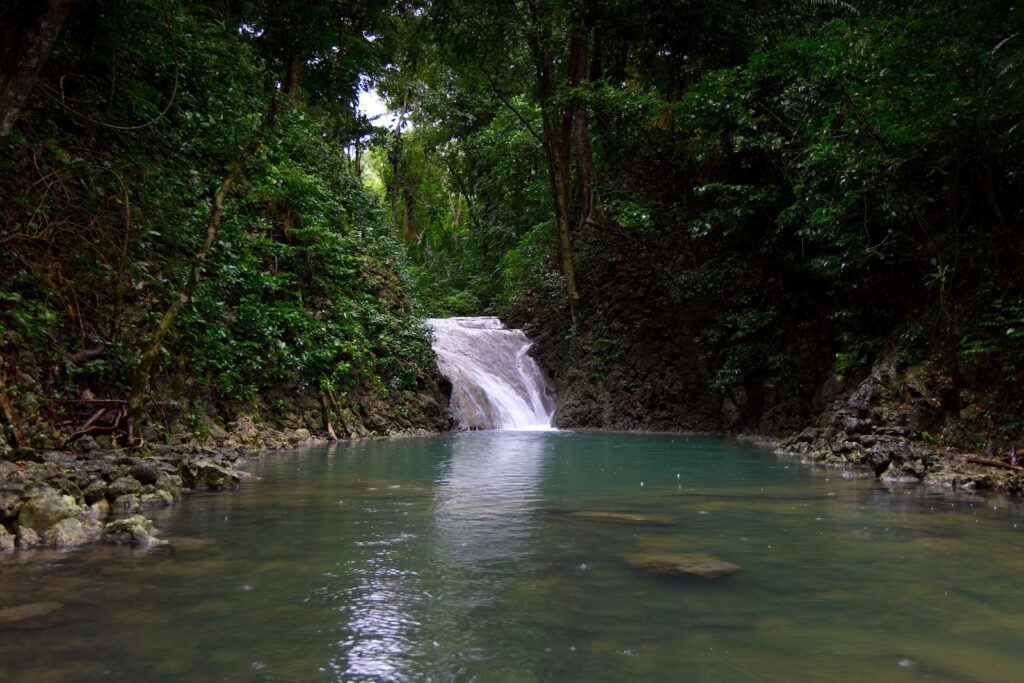
Here is the trade-off nobody puts in the brochure. Siete Altares runs on rainfall. Come in the dry season, roughly January to April, and you may find pools with barely a trickle between them. Come after heavy rain and the falls roar, but the trail turns to mud and the beach walk stops being pleasant. Rainy season is the better bet for the falls themselves.
The terrain is rock, and the safety infrastructure is a rope in places. Wear shoes you can grip in, not flip-flops. And go with a group or a guide rather than alone: the trail passes through isolated stretches, and this is standard local advice rather than a reason for alarm.
Budget 30 to 60 minutes at the pools once you arrive. Most people wish they had brought more water.
Is Playa Blanca worth the boat trip?
Verdict: Yes in dry season, when the water is clear. In September, spend the money elsewhere.
Playa Blanca is a privately run stretch of white sand about four miles west of Siete Altares along the same coast, and it is the closest thing to a Caribbean postcard beach that Guatemala has. Entry is Q20, and that fee goes toward clearing the sea rubbish that washes onto this entire coastline. There are loungers, showers, toilets, a restaurant and a bar.
Getting there means a boat from the municipal dock, about 30 minutes, typically around Q125 round trip negotiated before you leave. Many boatmen run a combined trip taking in Playa Blanca and Siete Altares in one day, which is efficient and slightly rushed.
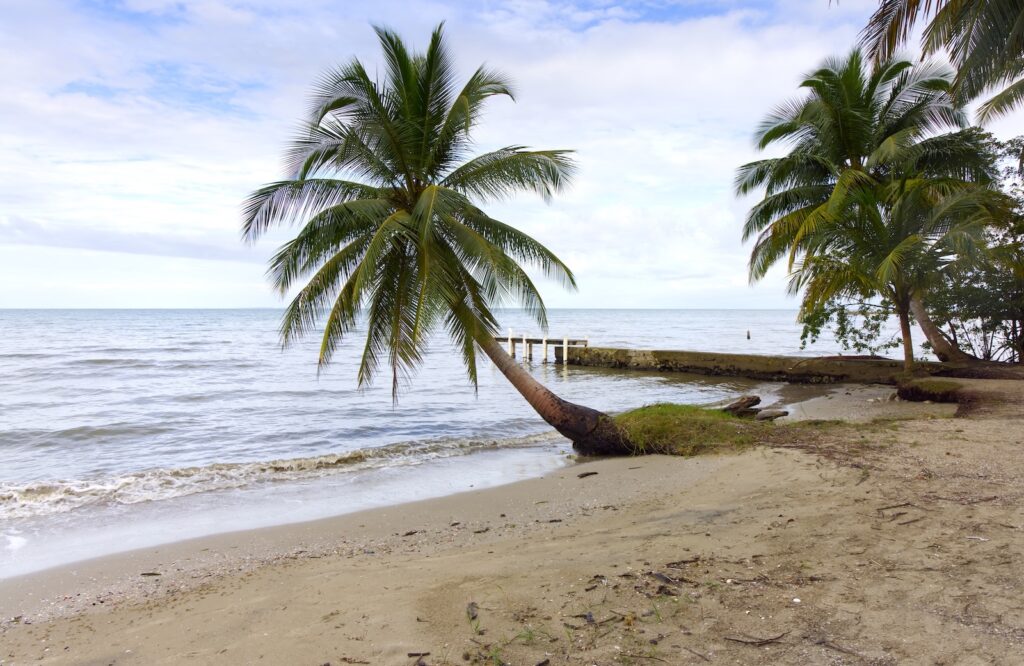
The honest caveat is seasonal. Amatique Bay takes runoff from several rivers, and in the rainy season the water at Playa Blanca turns brown and murky. At the height of the dry season it is clear and calm and lives up to the photographs. Weekends and Guatemalan holidays bring crowds from the mainland.
If you have seen a white sand beach before, and Siete Altares is running, choose the waterfalls.
Where can you eat tapado in Livingston?
Verdict: Order it on your first day, because comedores run out.
Tapado is the dish Livingston is known for: a coconut milk broth loaded with fish, shrimp, crab, plantain and yuca, served in a bowl big enough to make lunch the main event of your day. Expect Q80 to Q120 at a comedor in town, more at the waterfront restaurants.
It is not the only thing to eat here. Pan de coco, the dense coconut bread sold warm from doorways along Calle Principal, costs a few quetzales and disappears fast. Tableta is a hardened coconut and ginger sweet sold by the piece. Hudut is the deeper cut: fish in coconut broth eaten with mashed plantain pounded in a wooden mortar, and it takes so long to make that most restaurants do not offer it.
A note on timing. Kitchens here cook what the boats brought in. Arrive at 3pm and the tapado may be gone. Eat early.
Where can you experience Garifuna culture in Livingston?
Verdict: Dibasei Garifuna runs the most complete set of Garifuna experiences in town, and the one-hour options make it possible even on a layover.
Culture in Livingston is not behind glass. You will hear it walking Calle Principal on a Friday night. But hearing drums from the street and understanding what the rhythms mean are different things, and that gap is what a guided experience closes.
Dibasei Garifuna is a Garifuna-run organisation in Livingston offering twelve experiences, most of them hands-on rather than presentational. The range, with prices current as of July 2026:
- Murusu Garifuna, one hour, from Q185. The short introduction, built for travellers between boats.
- Garifuna Cultural Walk, 90 minutes, from Q250. Walking the town in traditional dress, greeting people in Garifuna, ending with drums.
- Garifuna Drums and Dance, two hours, from Q280. You play, you do not just watch.
- Tapado Cooking Experience, three hours, from Q335, and the Hudut Cooking Experience, three hours, from Q300. Cook the dish, then eat it.
- Garifuna Ancestral Remedies, two hours, from Q385. Plant medicine, and the knowledge system behind it.
- Garifuna for a Day, three hours, from Q385, if you want the full arc in one go.
The full list of experiences includes bread baking, breakfast, a tableta tasting and a cultural show for groups. Booking is online with payment on arrival, and cash or card both work in person.
The reason to do this rather than wander and hope: the money stays in the community whose culture you came to see, and someone answers your questions properly.
Drums are hard to describe and easy to watch. We film ours in Livingston, not in a studio.
Livingston sits at the mouth of the Río Dulce in Izabal, with no road connecting it to the rest of Guatemala. Boats run from Puerto Barrios across Amatique Bay and downriver from Río Dulce. See Garifuna experiences in Livingston.
What is there to do in the town of Livingston itself?
Verdict: An hour on foot orients you. The town is the point, not a waiting room between attractions.
Livingston is small enough to cross in 45 minutes. From the municipal dock at the foot of Calle Principal, the main street climbs a steep hill, and almost everything sits on it or just off it: shops, comedores, bars, a bank and an ATM.
Walk it and you will hear four languages in a few blocks. Garifuna, Spanish, Q’eqchi’ Maya, and English, sometimes in the same conversation. The Q’eqchi’ presence is the part most guides skip. Livingston is a hub for Q’eqchi’ communities of the Río Dulce region as much as it is a Garifuna town, and the daily overlap between the two is the thing regular visitors find most interesting about the place.
Two practical notes. If you have arrived from Belize or Honduras, the immigration office is about 150 metres uphill from the dock on the left, and you need your entry stamp. And the ATM in town has a habit of running dry, so bring cash from Río Dulce or Puerto Barrios rather than relying on it.
What is the Río Dulce boat trip like?
Verdict: The best scenery in Izabal, and you are probably taking it anyway as transport.
The run between Livingston and Fronteras, the town most people call Río Dulce, takes 90 minutes to two hours and costs around Q125 to Q150. Boats leave Río Dulce in the morning, typically around 9am and again later, and leave Livingston through the day.
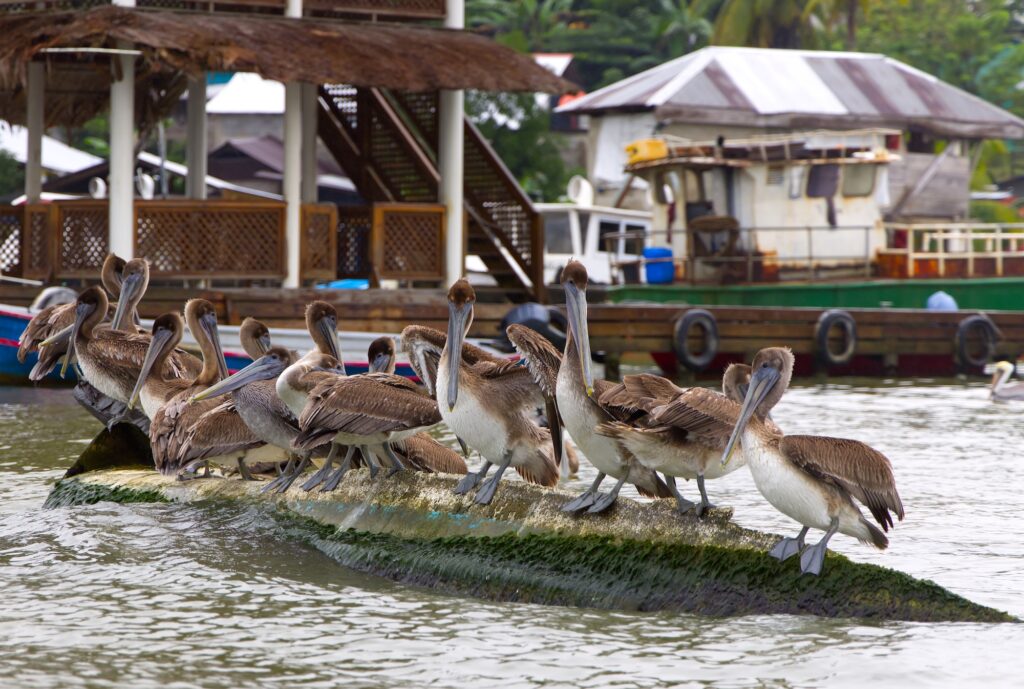
The first stretch out of Livingston runs through a steep limestone gorge with jungle to the waterline. After about 30 minutes the valley opens out and you start seeing lodges, houses, a pelican colony and, depending on the year, a shipwreck. Boatmen usually stop at the hot springs and at a bird lagoon.
The practical decision is direction. If you arrive from Puerto Barrios and leave via Río Dulce, you get the gorge on the way out with your luggage on your knees. Most people prefer arriving through it.
What happens on Garifuna Day in Livingston?
Verdict: 26 November is the best and most difficult day of the year to be here. Book months ahead.
Guatemala’s national Garifuna Day falls on 26 November, established by decree 83-96 in 1996. It marks the day in 1802 that Marcos Sánchez Díaz is said to have landed at the mouth of the Río Dulce with a group of Garifuna from Honduras and founded the settlement they called Labuga. November 2026 marks 224 years.
The day centres on the Yurumein, a re-enactment of the arrival in which boats come ashore with drums, and the celebration runs for days around it with processions and music through the town.
The history is contested and the contest matters. Garifuna oral tradition names Marcos Sánchez Díaz as the founder. A Guatemalan decree of 26 November 1831 instead credited a Marcos Monteros, and research by anthropologist Alfonso Arrivillaga in the Boletín de Antropología works through the conflicting written and oral records. The Garínagu recognise Sánchez Díaz. That same 1831 decree also renamed the town after Edward Livingston, an American jurist whose penal codes Guatemala was adopting, and who never set foot in it.
If you come for Garifuna Day, book accommodation and boats well in advance. The town fills.
How do you get to Livingston, Guatemala?
There are no roads in or out. Every arrival is by boat, and this shapes the whole trip.
From Puerto Barrios. The shortest and cheapest crossing. Boats leave the Muelle Municipal, take 30 to 40 minutes across Amatique Bay, and cost roughly Q35 to Q50. Some run on a schedule and others go when they fill, which is usually quickly. The first boat back from Livingston leaves around 5:30am.
From Río Dulce (Fronteras). Longer, more scenic, more expensive: 90 minutes to two hours, roughly Q125 to Q150, with morning departures. This is the route to take if you have any choice, because the gorge is the best part.
From Belize. Boats connect via Punta Gorda. Check current operating days before committing, and expect a Belize departure fee.
Getting to either port. Puerto Barrios is about five hours from Guatemala City by Litegua bus. Río Dulce is around 79 km from Livingston by water and reachable by bus from Guatemala City, Antigua and Flores.
Two things to plan around: crossings thin out after mid-afternoon and mostly stop by dark, and open lanchas offer no shelter, so a rainy crossing means a wet arrival. ASOTRANSLALI, the Livingston boatmen’s association, operates from the office at the foot of Calle Principal.
Dibasei Garifuna, in Livingston at the mouth of the Río Dulce. No road reaches the town: boats cross from Puerto Barrios in 30 to 40 minutes, or run downriver from Río Dulce in about two hours. See Garifuna experiences in Livingston
When is the best time to visit Livingston?
Dry season, roughly January through April, gives you clear water at Playa Blanca, calmer boat crossings and comfortable walking. It also gives you Siete Altares at its weakest.
Rainy season, roughly June through November, does the reverse. The waterfalls run properly, the jungle looks the way you imagined it, and the sea at Playa Blanca goes brown with river runoff.
Pick your season by what you came for. If the answer is Garifuna culture, the season barely matters and 26 November is the peak.
Mosquitoes are a year-round fact on this coast, not a seasonal one. Bring repellent.
Weather along the Izabal route
Loading…Rain matters more than temperature here. Siete Altares runs on recent rainfall and Playa Blanca goes murky after it. Live data via Open-Meteo.
Only have a few hours in Livingston?
Plenty of people arrive on the morning boat and leave on the afternoon one. That is a real itinerary, not a failure.
Two hours. Walk up Calle Principal, eat tapado, and book a one-hour cultural experience. You will leave with more than the people who spent all day at a beach.
Half a day. Add either the town walk with a guide or a cooking experience, which puts you in a kitchen and gets you fed at the same time.
A full day. Siete Altares in the morning, tapado at lunch, drums in the afternoon. Or swap the falls for Playa Blanca if it is February and the sea is clear.
Two nights. Now you can do the falls, the beach, and a proper evening in town, which is when Livingston is at its best.
What Livingston is not
Credibility here means telling you what will be hard.
It is not a resort town. There is real poverty, the streets are rough in places, and some travellers find it shabby rather than charming. Opinions on Livingston divide sharply and always have.
The town beaches are not good. People come here for culture, food and the surrounding water, not for sand within walking distance. Playa Blanca is a boat ride away for a reason.
Infrastructure is thin. Internet is slow and unreliable, so do not plan to work remotely from here. The ATM runs out. Bring cash.
Boats stop. Miss the last crossing and you are staying the night, which is a fine outcome if you planned for it and an expensive one if you did not.
It is not a day trip from Antigua. Antigua is about 342 km away, and Guatemala City about 307 km, and then you still need a boat. Livingston works when you build it into an Izabal leg with Río Dulce, not when you bolt it onto a highlands itinerary.
Frequently asked questions
Is Livingston, Guatemala worth visiting? Yes, if you want a side of Guatemala that has nothing to do with volcanoes and colonial architecture. It is the only Garifuna town in the country and the food, music and languages reflect that. If you need beaches and polished infrastructure, Belize or Roatán will serve you better.
Can you drive to Livingston? No. There is no road access. You can drive to Puerto Barrios or Río Dulce and leave your car in secure parking near the docks, usually around Q30 per day, then cross by boat.
How many days do you need in Livingston? One full day covers the town, a meal and one excursion. Two nights lets you do both Siete Altares and Playa Blanca without rushing. Travellers between boats can still get something worthwhile out of two hours.
Do people speak English in Livingston? Some do, and you will hear English on the street thanks to the Belize and diaspora connections, but Spanish is the working language and Garifuna is spoken at home. English coverage among boatmen and comedores is limited. A few phrases of Spanish go a long way.
Is it safe to walk to Siete Altares alone? Local advice is to go with a group or a guide rather than solo, because the trail passes isolated ground. The Australian government’s travel advice also flags boat security on the Río Dulce and around Livingston, so check who you are travelling with before you board.
What is the difference between Garifuna Day in Guatemala and Belize? Guatemala marks it on 26 November, tied to the 1802 landing at Labuga. Belize celebrates Garifuna Settlement Day on 19 November, a national holiday created by activist Thomas Vincent Ramos in 1941 and made national in 1977. Same people, different dates, different arrival stories.
Can you visit Livingston from Belize? Yes, by water taxi via Punta Gorda to Livingston or Puerto Barrios. Confirm sailing days in advance, since services do not run daily, and budget for the Belize departure fee.
Is Livingston expensive? No, but the boat is. Transport is the main cost: figure Q250 to Q300 round trip from Río Dulce. Once you are there, a bowl of tapado runs Q80 to Q120 and entry fees to the falls and the beach are Q20 each.
Been to Livingston? Tell us what we missed
Every visitor’s Livingston is a bit different, and the town changes faster than any guide keeps up with.
Two questions we would like answered in the comments. First, which comedor served you the best tapado, and what did you pay? We want to keep the price ranges in this guide honest, and the only way to do that is with recent receipts. Second, if you walked to Siete Altares rather than taking the boat, how long did it take you and would you do it again?
If you visited during Garifuna Day, we would take that account over any of the rest. Tell us what the Yurumein was like from the beach.
Prices, boat times and entry fees in this guide were checked in July 2026 and change without notice, particularly boat fares. Confirm at the dock before you travel.